How to leave Booking.com: a 2026 guide for hosts

Kyros Kyros | MyStaySite
May 4, 2026
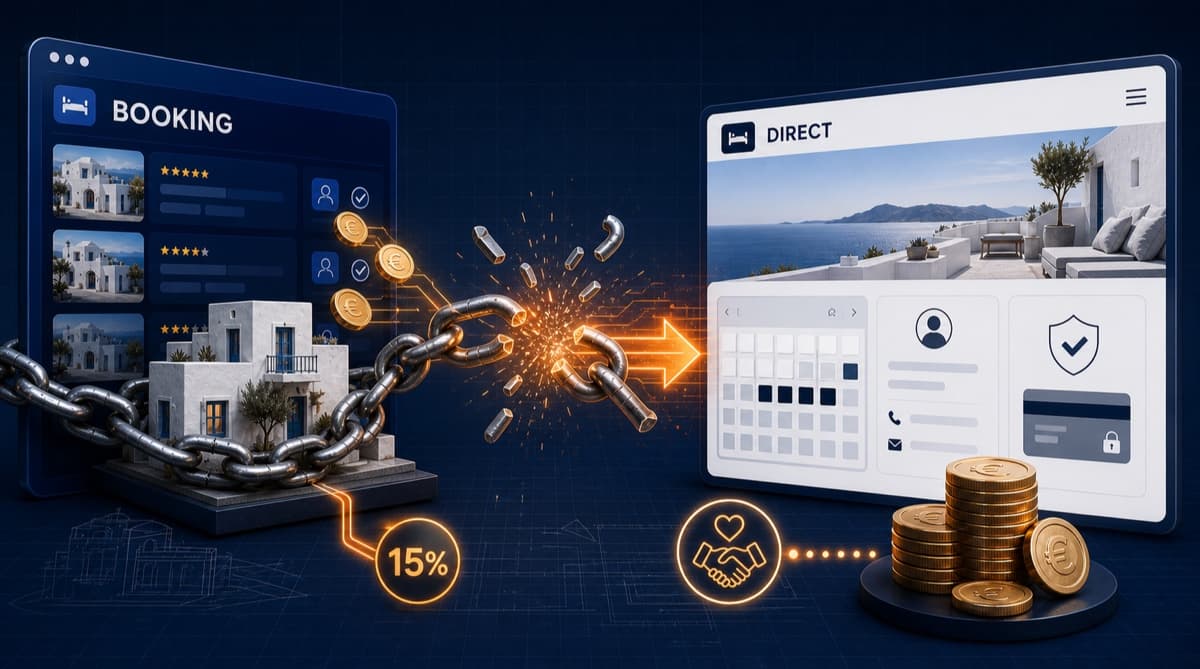
If you run a vacation rental in Greece, you already know the feeling: most of your bookings flow through one platform, and that platform takes a commission on every single night. Leaving Booking.com does not have to mean closing your account tomorrow morning. It means gradually reducing your dependence, building channels you own, and bringing more direct bookings to your property. This guide walks you through six practical steps, in plain language, with no technical jargon you don't need.
Why you don't need a "total exit" from Booking.com
Booking.com delivers visibility and bookings, especially when you're just starting out or your area draws heavy traffic. The realistic goal is to stop depending on it almost exclusively. There is no single magic alternative to Booking.com. There is a combination: your own website, Google, reviews, social media, and targeted advertising where it makes sense. That way you keep the channel that works today while building security for tomorrow.
If you want to put numbers on what the platform actually costs you first, read how much Booking.com really costs you. It will help you weigh commissions against investing in a channel of your own.
Step 1: Build your own website
The first step toward more direct bookings is a clear, fast website with photos, rates, availability, and an obvious way to book or get in touch. A visitor should understand within seconds what you offer, where you are, and how to book.
You don't need to become a developer. You need a structure travelers trust: professional photos, easy-to-read copy, and a "book now" or "contact" button on every important page. When your website is your home base online, every other step in this guide (Google, reviews, ads) sends people there, without a commission taken out of the booking itself.
Take a look at our portfolio to see what a vacation rental can look like on the web.
Step 2: Complete and update your Google Business Profile
Your Google profile (map listing, hours, photos, phone number, website link) is often the first touchpoint when someone searches "rooms near me" or the name of your area. Make sure it's fully filled out, with consistent answers to common questions and the correct property category.
Ask happy guests to leave a Google review after their stay. An up-to-date profile with strong reviews builds trust and sends people to your website or your phone, channels you control.
Step 3: Collect reviews that drive direct bookings
Reviews on Google and on other platforms you choose (Facebook, for example) work as social proof. When someone is considering booking directly, they look for signs of credibility: photos from real guests, recent comments, and your replies to them.
A polite message after check-out with a link to your profile is all it takes. No pressure needed: a clear, friendly ask does the job. The goal is to stop relying only on reviews inside Booking.com and to look strong exactly where a guest decides to book with you directly.
Step 4: Optimize for Google searches (SEO)
SEO is simply the work of showing up when someone types "accommodation in [your area]" or similar phrases. In practice, that means clear page titles, descriptions of what you offer, your location and the words travelers actually use, a fast site, and a connection to your Google Business Profile.
For a more detailed roadmap, follow our SEO guide for vacation rentals. You'll find ideas you can apply step by step, no coding knowledge required.
Step 5: Show up on social media
You don't need to be on every network. Pick one or two where your guests actually are (usually Facebook or Instagram for Greek vacation rentals) and post at a pace you can sustain: seasonal updates, offers, photos from the stay, stories from your area.
Keep a link to your website or your phone number in your bio and in your posts. That way social media works as a supporting channel that feeds your direct bookings, not a replacement for your website.
Step 6: Google Ads for fast results
SEO takes time to build. If you want visitors on your site sooner, targeted Google ads can reach people already searching for a place to stay in your area. Start with a small budget, track which keywords bring enquiries or bookings, and adjust from there.
For how paid ads and organic visibility fit together, read Google Ads vs SEO. It will help you avoid wasting budget and combine the two sensibly.
Cost comparison: Booking.com commissions vs investing in a website
Every property has different revenue and seasonality, but the logic is the same: as your direct bookings grow, you keep a bigger share of every night's revenue.
Booking.com commissions are a recurring percentage of every booking. Even on a conservative estimate, many properties hand thousands of euros a year to a middleman. A professional website has a build and maintenance cost, but it doesn't skim the same percentage off every night a guest books directly with you.
Think of it this way: shift even 25% or 30% of your bookings to a direct channel, and the commission savings can quickly cover your initial investment in the site and basic promotion. The share that stays on Booking.com can still fill rooms in slower periods, without leaving you locked into a single channel.
Next steps
"Leaving Booking.com" really means reducing your dependence and growing direct bookings for your property. Start with your website and Google Business Profile, collect reviews, strengthen your SEO, keep a steady presence on social media, and use ads wherever you need a fast boost in traffic.
If you want to see what your own online presence could look like, browse our portfolio and get in touch for a simple, no-obligation action plan. We're here to help you earn more from your work and lose less to third-party commissions.
Thinking about your own property website?
Send me just your property name to get started. We will clarify what you need and I will send a proposal with a specific scope and cost. No obligation.
You provide the photos. I handle the content, design and technical work, with your approval.
See the work in practice
Explore real property websites I have builtGet the 10-mistakes guide + 1 practical tip every month
The guide 9 out of 10 Greek vacation rentals need, plus one short email a month with practical tips for winning more direct bookings. No spam. Unsubscribe anytime.
- 10 common mistakes + 10 concrete fixes
- 1 short email a month with new case studies
- No spam. Unsubscribe with one click.
Related articles

The complete guide to direct bookings in 2026
What direct bookings are and how to build them: website, SEO, Google Business Profile, reviews, email, booking engine, payments, KPIs. Everything a Greek vacation rental needs to escape OTA commissions.
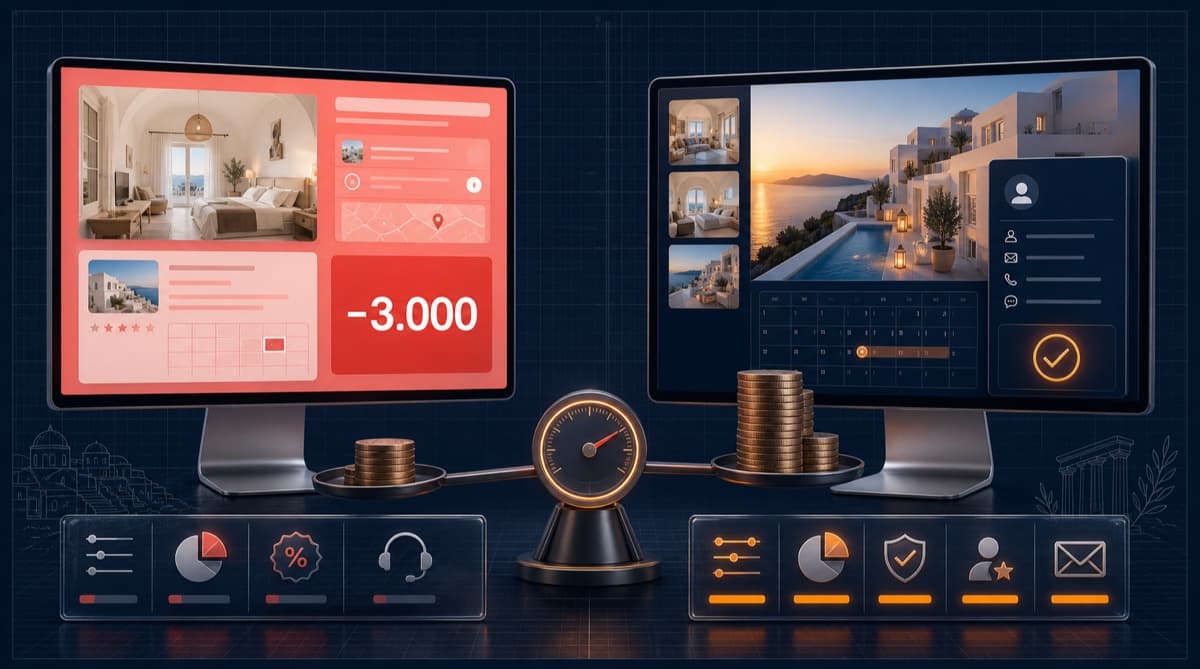
Airbnb vs your own website: which one pays off?
Airbnb vs your own website, compared honestly: fees, control, branding, and which channel actually pays off for your vacation rental.
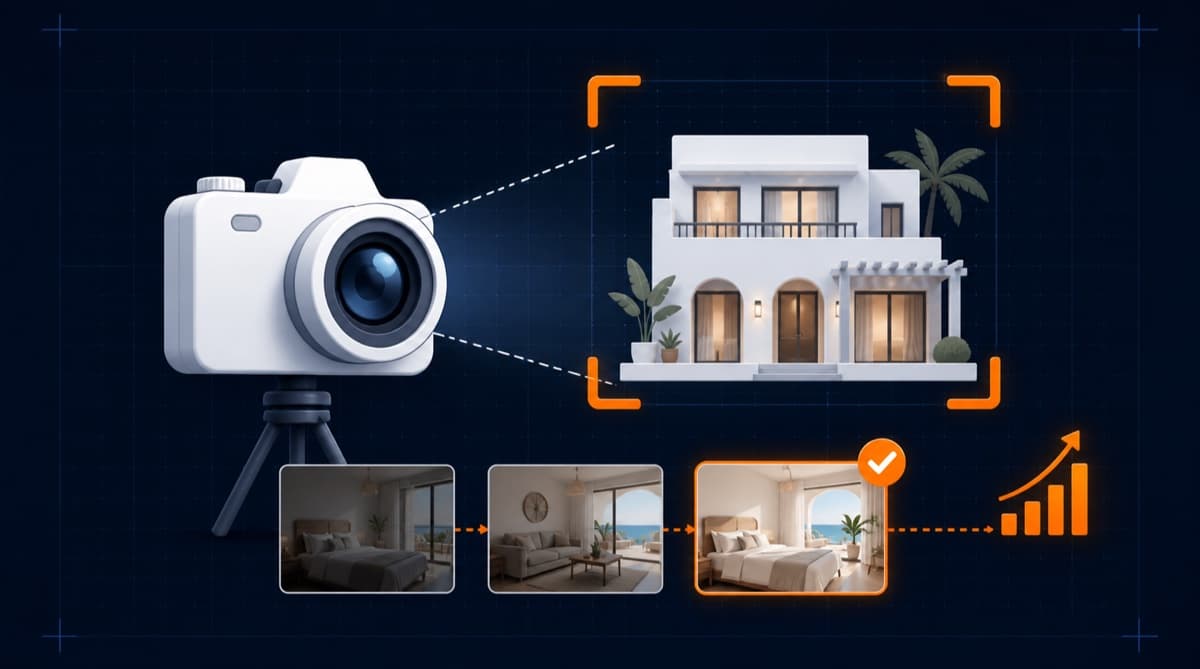
Vacation rental photography: the guide to more bookings in 2026
Photos are the #1 filter before anyone books. A practical guide to better shots, the right order, and more clicks on Booking.com and Airbnb.